You’re balancing budget constraints with serious astrophotography ambitions. Finding the right USB guide camera shouldn’t mean compromising on performance. Whether you’re upgrading your current setup or starting fresh, you’ll discover three solid contenders that deliver exceptional value without breaking the bank. Each brings distinct advantages that might just transform your guiding capabilities.
| SVBONY SV905C Guide Camera for Astrophotography |  | Best for Autoguiding | Sensor Type: 1/3″ CMOS color sensor | USB Connectivity: USB 2.0 | Resolution: 1280×960 (1.23MP) | CHECK ON AMAZON | Read Our Analysis |
| SVBONY SV105 Telescope Camera USB CMOS Astrophotography | 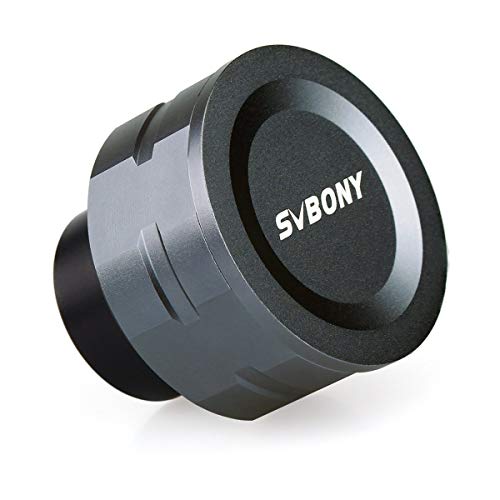 | Best for Beginners | Sensor Type: 1/2.8″ IMX307 CMOS color sensor | USB Connectivity: USB 2.0 | Resolution: 1920×1080 (up to 2K video) | CHECK ON AMAZON | Read Our Analysis |
| ELP Global Shutter USB Camera 1080P 90fps |  | Best High-Speed Option | Sensor Type: 1/2.6″ Aptina AR0234 global shutter sensor | USB Connectivity: USB plug-and-play | Resolution: 1920×1200 (2MP) | CHECK ON AMAZON | Read Our Analysis |
More Details on Our Top Picks
SVBONY SV905C Guide Camera for Astrophotography
Are you searching for a guide camera that won’t drain your wallet while delivering reliable autoguiding performance? The SVBONY SV905C offers exceptional value with its 1.23MP color sensor and impressive ~80% peak quantum efficiency. You’ll appreciate the low read noise for tracking faint guide stars with precision. Its 1.25″ form factor accommodates various guide lenses, while CS-mount compatibility provides flexibility. The camera integrates seamlessly with PHD2, NINA, SKY-X, and other leading guide software. At just 8 ounces with convenient snap ring focusing, you’ll find setup straightforward. ST4 guide interface and USB 2.0 connectivity complete this budget-friendly package for serious astrophotography.
- Sensor Type:1/3″ CMOS color sensor
- USB Connectivity:USB 2.0
- Resolution:1280×960 (1.23MP)
- Frame Rate Capability:Real-time tracking for guide stars
- 1.25″ Optical Interface:1.25″ form factor with snap ring
- Operating System Compatibility:Windows/Linux via guide software (PHD2, NINA, SKY-X)
- Additional Feature:ST4 guide interface compatibility
- Additional Feature:AR-coated front optics
- Additional Feature:High peak QE ~80%
SVBONY SV105 Telescope Camera USB CMOS Astrophotography
Want to plunge into planetary and lunar imaging without breaking the bank? The SVBONY SV105 offers an excellent entry point. This plug-and-play USB camera features a 1/2.8″ IMX307 sensor delivering 1920×1080 resolution at 30fps, plus 2K video recording capability. Its dark light compensation technology sharpens low-light performance, ideal for lunar details and bright planetary targets. The standard 1.25″ eyepiece interface threads directly into your telescope, and it’s compatible with filters. Compatible with Windows, Linux, macOS, and Android, you’ll quickly transfer real-time views to your laptop. Weighing just 10.2 ounces, it’s genuinely beginner-friendly.
- Sensor Type:1/2.8″ IMX307 CMOS color sensor
- USB Connectivity:USB 2.0
- Resolution:1920×1080 (up to 2K video)
- Frame Rate Capability:Up to 30 fps at 1920×1080
- 1.25″ Optical Interface:Standard 1.25″ eyepiece connection
- Operating System Compatibility:Windows, macOS, Linux, Android
- Additional Feature:Dark light compensation technology
- Additional Feature:Plug and play setup
- Additional Feature:Records 2K video capability
ELP Global Shutter USB Camera 1080P 90fps
If you’re seeking a compact, no-fuss camera that delivers sharp astrophotography without breaking your budget, the ELP Global Shutter USB Camera deserves your attention. Its 1/2.6″ Aptina AR0234 sensor captures 2MP images at up to 90fps, eliminating rolling artifacts that plague rolling shutter cameras during celestial imaging. The 120-degree wide-angle lens provides excellent sky coverage, while global shutter technology ensures accurate, complete frames of fast-moving objects. You’ll appreciate the plug-and-play UVC compliance—no driver installations required. At just 7 ounces with compact 38mm dimensions, it fits easily into tight observatory setups. Exceptional low-light performance makes it ideal for faint deep-sky objects, and its 4.7/5 rating confirms users’ satisfaction.
- Sensor Type:1/2.6″ Aptina AR0234 global shutter sensor
- USB Connectivity:USB plug-and-play
- Resolution:1920×1200 (2MP)
- Frame Rate Capability:Up to 90 fps at 1920×1200/1080P
- 1.25″ Optical Interface:Compatible with standard telescope mounts via USB
- Operating System Compatibility:Windows, macOS, Linux, Android, Raspberry Pi
- Additional Feature:Global shutter technology
- Additional Feature:120-degree wide-angle lens
- Additional Feature:UVC compliant plug-and-play
Factors to Consider When Choosing a USB Guide Camera for Budget Astrophotography Autoguiding
When you’re shopping for a USB guide camera, you’ll want to evaluate sensor quality and performance to ensure accurate star tracking during long exposures. You should also verify compatibility with your existing guide software and check the read noise and sensitivity levels, since these specs directly impact your autoguiding precision in low-light conditions. Finally, you’ll need to balance the optical interface and form factor against your budget-friendly price point to find the best value for your astrophotography setup.
Sensor Quality And Performance
Why does your guide camera’s sensor matter more than you might think? Your sensor’s quantum efficiency directly impacts low-light performance, reducing exposure times for faint guide stars. Low read noise is equally critical—it minimizes background interference and sharpens centroid accuracy during guiding calculations.
When selecting a sensor, you’ll want a 1/3″ to 1/2″ format with 3–5 micron pixels. This combination balances field of view with resolution for your 1.25″ guide scope. A global shutter eliminates rolling artifacts that distort centroid measurements on rapidly moving targets.
Finally, examine dark current behavior. Sensors with minimal dark noise enable reliable extended guiding sessions without thermal drift compromising your autoguiding stability throughout the night.
Compatibility With Guide Software
Once you’ve settled on superior sensor performance, you’ll need to confirm that your guide camera actually works with the software controlling your autoguiding system. Look for cameras compatible with PHD2, MDL, NINA, and SKY-X to ensure broad interoperability across popular platforms.
Beyond software compatibility, consider cameras offering direct ST4 guide port support. This feature proves invaluable when software options are limited, allowing you to use traditional guiding signals instead.
Driver requirements matter too. Prioritize cameras with driver-free or minimal-driver operation, which enhances plug-and-play reliability across Windows, macOS, and Linux systems. This approach eliminates installation headaches and ensures your equipment works immediately upon connection, maximizing your observing time and minimizing technical frustrations.
Optical Interface And Form Factor
Your guide camera’s optical interface and form factor directly determine how well it integrates with your telescope setup and affects your autoguiding precision. A 1.25″ barrel housing offers mounting flexibility, seamlessly integrating into standard guide scopes and off-axis guider (OAG) setups without adapter complications.
You’ll benefit from AR-coated front optics that maximize light transmission and minimize reflections, essential for detecting guide stars in bright skies. Most budget 1.25″ guide cameras feature 3.75-micron pixels, balancing field of view with guiding precision at typical focal lengths.
Look for practical design elements like snap rings, scale marks, and quick-focus aids that streamline your alignment workflow. These features reduce setup time and improve accuracy during autoguiding sessions, making your observing nights more productive and less frustrating.
Budget-Friendly Price Point
How do you balance performance with affordability when selecting a guide camera? Budget-friendly USB guide cameras typically cost significantly less than high-end models, making them ideal for entry-level astrophotography setups. You’ll find economical options with 1/3″ to 1/2.8″ sensors and modest pixel counts that still deliver adequate guide precision for basic autoguiding.
When evaluating price points, prioritize peak quantum efficiency and low read noise within your budget range. These specifications directly influence guide star detectability and guiding accuracy at faint magnitudes. USB 2.0 interfaces and color sensors are common in affordable models, providing straightforward plug-and-play operation with popular guiding software.
You don’t need premium specifications to achieve reliable autoguiding. Focus on essential performance metrics rather than unnecessary features to maximize your investment.
Read Noise And Sensitivity Levels
While balancing price and performance helps you select an affordable guide camera, the underlying sensor characteristics—read noise and sensitivity—ultimately determine whether that camera can actually detect faint guide stars and maintain accurate tracking. Read noise, measured in electrons RMS, represents electronic interference when no light enters the sensor. You’ll want a camera with read noise around 2–3 e− RMS for reliable faint-star guiding. Sensitivity, expressed as quantum efficiency (QE), measures how effectively the sensor converts incoming photons into usable electrons. Higher QE improves your signal-to-noise ratio, enabling shorter exposure times without sacrificing centroid accuracy. Together, low read noise and high QE let you guide on dimmer stars quickly, reducing tracking errors and improving overall mount performance.
Autofocus And Focusing Mechanisms
When you’re evaluating budget guide cameras, you’ll quickly discover that autofocus isn’t a standard feature—most models rely on manual focusing through adjustable focus rings on their 1.25″ or CS interfaces. You’ll achieve repeatable positioning using scale marks and snap rings, which prevent focus drift during guide exposures.
Precise focus is critical because even slight defocus elongates guide stars, degrading centroiding accuracy and compromising your guiding performance. Look for cameras with clear tactile feedback and tight-fit housings that maintain focus stability between sessions.
Some adapters feature fine-adjustment threads for incremental focus changes without rotating the camera body. Prioritize models with locking mechanisms or friction-fit rings that lock your focus settings reliably, ensuring consistent performance throughout your imaging sessions.
Build Quality And Durability
What separates a guide camera that’ll last through countless imaging sessions from one that’ll fail mid-night? Build quality and durability.
You’ll want robust metal or reinforced plastic housing that withstands motorized focus clamps and guiding triggers during extended use. Look for a snug 1.25″ form factor with reliable locking mechanisms—SNAP rings or thumbscrews—that maintain alignment after repeated handling.
AR-coated optics and minimal flex in adapter interfaces prevent image shift from temperature fluctuations. Verify connector durability with USB 2.0/3.0 compatibility and secure ST4 guide interfaces to avoid accidental disconnections.
Weight matters too. Around 8 ounces with a compact 1.25″ housing minimizes load on your guiding system and maintains balance on portable setups. These durability factors directly impact your autoguiding reliability and long-term investment value.
Connectivity And USB Standards
Your guide camera’s connectivity determines how quickly it communicates with your autoguiding software and mount—literally the difference between smooth tracking and missed corrections. USB 3.x cameras deliver up to 5 Gbps, enabling faster frame rates and high-resolution imaging without dropped frames during short exposures. USB 2.0 caps out at 480 Mbps, which limits real-time performance on budget setups.
Check connector compatibility with your laptop and mount. USB-C offers modern flexibility, while USB-A remains widely supported. Verify driver support across Windows, macOS, and Linux to ensure plug-and-play reliability. Additionally, confirm whether your camera needs external power or runs on bus power—this affects how many peripherals you can operate simultaneously during your imaging sessions.
Frequently Asked Questions
What Is the Difference Between a Guide Camera and a Main Imaging Camera?
You’ll use a guide camera to track star movements and correct telescope positioning during long exposures. Your main imaging camera captures the actual deep-sky photographs. Guide cameras are smaller, simpler, and less expensive than imaging cameras.
How Do I Connect a USB Guide Camera to My Telescope Mount’s Autoguider?
You’ll connect your USB guide camera directly to your computer’s USB port, then use guiding software like PHD2 or Sequence Generator Pro to communicate with your mount’s autoguider via a separate serial connection.
Can I Use a Guide Camera for Planetary Imaging Instead of Autoguiding?
You can use a guide camera for planetary imaging, though you’ll sacrifice some image quality. Guide cameras typically have smaller sensors and lower resolution than dedicated planetary cameras, limiting your detail capture on planets like Jupiter and Saturn.
What Computer Specifications Do I Need to Run Guide Camera Software?
You’ll need a processor with at least 2GHz speed, 4GB RAM minimum, and USB 2.0 ports. Most guide camera software runs on Windows, Mac, or Linux. You don’t require high-end specs for reliable autoguiding performance.
How Does Sensor Size Affect Guide Camera Performance in Astrophotography?
You’ll find that larger sensors capture more light, giving you better guide star detection in faint conditions. Smaller sensors work fine for bright stars but struggle during poor weather or when you’re tracking dim objects accurately.