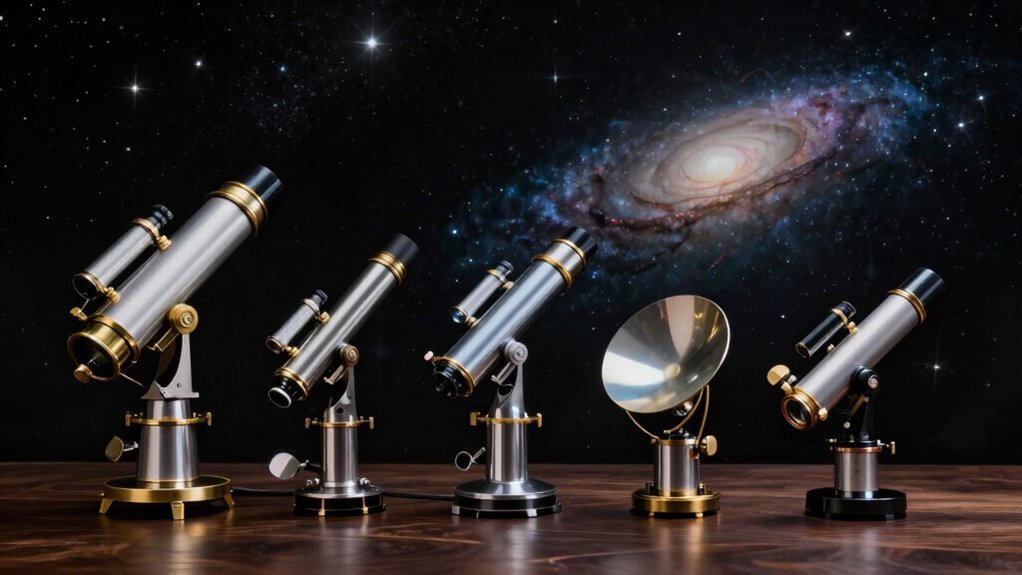
You’re ready to start astrophotography, but you’re not sure where to spend your money. A solid telescope shouldn’t drain your budget—it should enhance it. The right choice depends on your priorities: aperture size, portability, tracking capability, or smart features. We’ll walk you through seven contenders that won’t disappoint.
| Dianfan 90mm Refractor Telescope for Adults & Beginners |  | Best Portable Refractor | Telescope Type: Refractor (90mm) | Magnification Range: 32×–240× | Included Accessories: Stainless tripod, phone adapter, carry bag | CHECK ON AMAZON | Read Our Analysis |
| Telescope 150EQ Newtonian Reflector for Adults Astronomy | 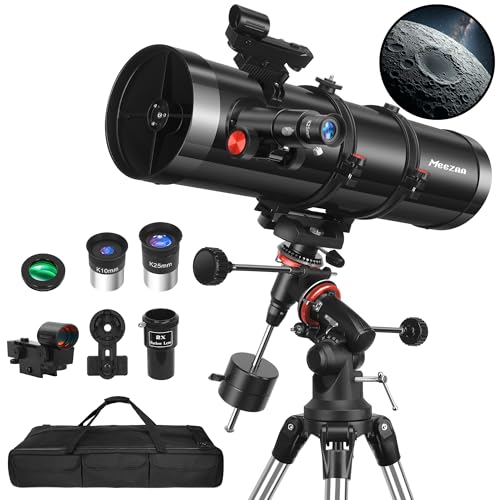 | Best Deep-Sky Viewing | Telescope Type: Newtonian Reflector (150mm) | Magnification Range: 26×–130× | Included Accessories: Equatorial mount, tripod, 2 eyepieces, 2x Barlow lens, red dot finderscope, moon filter, phone adapter, carry bag | CHECK ON AMAZON | Read Our Analysis |
| Celestron StarSense Explorer LT 114AZ App-Enabled Telescope | 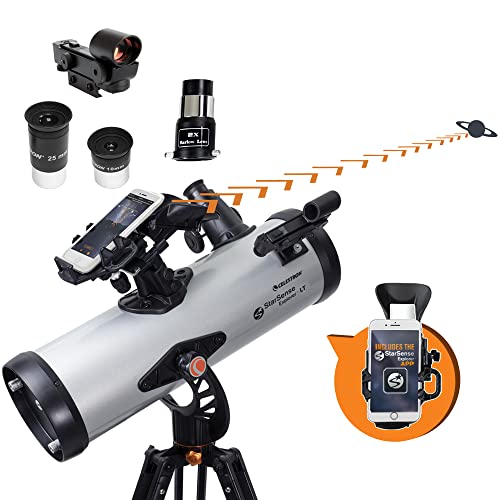 | Best App-Enabled | Telescope Type: Newtonian Reflector (114mm) | Magnification Range: 20×–50× (with 10mm and 25mm eyepieces) | Included Accessories: Two eyepieces, red dot finderscope, full-height tripod, StarSense smartphone dock | CHECK ON AMAZON | Read Our Analysis |
| Hawkko 80mm Refractor Telescope for Adults & Kids |  | Best For Kids | Telescope Type: Refractor (80mm) | Magnification Range: 20×–150× | Included Accessories: Aluminum tripod, phone adapter, backpack, decorative stickers | CHECK ON AMAZON | Read Our Analysis |
| Celestron StarSense Explorer DX 5-inch App-Enabled Telescope |  | Best Smart Features | Telescope Type: Schmidt-Cassegrain (130mm) | Magnification Range: 26×–65× (with 10mm and 25mm eyepieces) | Included Accessories: Two eyepieces, erect image diagonal, red dot finderscope, full-height tripod, StarSense smartphone dock | CHECK ON AMAZON | Read Our Analysis |
| Celestron PowerSeeker 127EQ Telescope for Beginners | 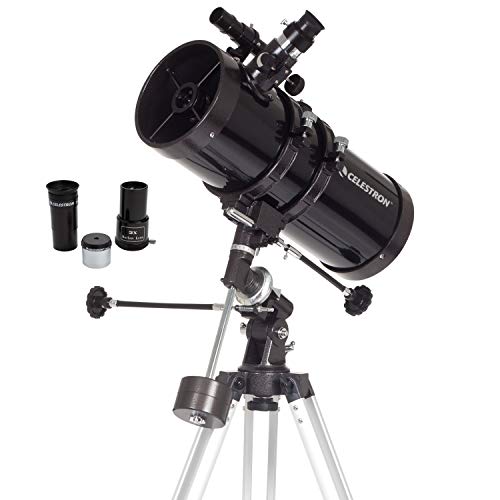 | Best Value | Telescope Type: Newtonian Reflector (127mm) | Magnification Range: 20×–150× (with 20mm, 4mm eyepieces and 3x Barlow) | Included Accessories: German Equatorial mount, travel tripod, 2 eyepieces, 3x Barlow lens, Starry Night Basic software | CHECK ON AMAZON | Read Our Analysis |
| Gskyer 70mm Aperture Astronomical Refracting Telescope |  | Most Travel-Friendly | Telescope Type: Refracting (70mm) | Magnification Range: 18×–135× (with 3x Barlow lens) | Included Accessories: Aluminum tripod, smartphone adapter, carry bag, 5×24 finder scope, wireless remote control | CHECK ON AMAZON | Read Our Analysis |
More Details on Our Top Picks
Dianfan 90mm Refractor Telescope for Adults & Beginners
Are you looking for a telescope that doesn’t demand hours of assembly or drain your budget? The Dianfan 90mm Refractor Telescope delivers exactly that. You’ll get a 90mm objective lens with 800mm focal length and fully coated optics, giving you crisp views of lunar craters and planets. The included 45° zenith mirror keeps images upright for terrestrial viewing. You can magnify between 32× and 240× using two eyepieces plus the 3× Barlow lens. Setup takes roughly 15 minutes, and the lightweight stainless steel tripod fits easily into the included carry bag. Whether you’re observing the night sky or wildlife, this portable refractor handles it all affordably.
- Telescope Type:Refractor (90mm)
- Magnification Range:32×–240×
- Included Accessories:Stainless tripod, phone adapter, carry bag
- Aperture Size:90mm
- Mount Type:Stainless steel tripod with 45° zenith mirror
- Observing Targets:Lunar craters and seas, planets, deep-sky objects, terrestrial viewing
- Additional Feature:45° zenith mirror upright images
- Additional Feature:Quick 15-minute setup
- Additional Feature:Fully coated optics contrast
Telescope 150EQ Newtonian Reflector for Adults Astronomy
Looking for a telescope that doesn’t compromise on aperture or stability? The 150EQ Newtonian Reflector delivers a powerful 150mm aperture with 650mm focal length, gathering substantial light for crisp planetary and deep-space views. You’ll get magnifications from 26X to 130X using two eyepieces and a 2X Barlow lens. The German equatorial mount features precision dials and slow-motion controls for smooth tracking. Its heavy-duty stainless steel tripod won’t wobble, while the red dot finderscope gets you on target quickly. With a moon filter included and everything fitting into a carry bag, you’re ready to observe immediately—no tools required.
- Telescope Type:Newtonian Reflector (150mm)
- Magnification Range:26×–130×
- Included Accessories:Equatorial mount, tripod, 2 eyepieces, 2x Barlow lens, red dot finderscope, moon filter, phone adapter, carry bag
- Aperture Size:150mm
- Mount Type:German Equatorial mount with precision dials and slow-motion control
- Observing Targets:Moon, planets, deep-space objects
- Additional Feature:German equatorial mount tracking
- Additional Feature:Precision dials slow-motion control
- Additional Feature:Moon filter glare reduction
Celestron StarSense Explorer LT 114AZ App-Enabled Telescope
If you’re tired of struggling with complex telescope setup and star charts, the Celestron StarSense Explorer LT 114AZ app-enabled telescope transforms how beginners approach astrophotography. You’ll dock your smartphone and let the StarSense app guide you directly to celestial objects through on-screen arrows. The patented sky recognition technology analyzes star patterns in real-time, determining your telescope’s exact position with impressive accuracy. You’ll observe stunning views of the Moon, Jupiter, Saturn, and deep-sky objects like the Orion Nebula. The 114mm Newtonian reflector includes two eyepieces, a finderscope, and tripod. Compatible with Android 12+ and iOS 18+, this beginner-friendly system eliminates frustration while delivering exceptional performance and value.
- Telescope Type:Newtonian Reflector (114mm)
- Magnification Range:20×–50× (with 10mm and 25mm eyepieces)
- Included Accessories:Two eyepieces, red dot finderscope, full-height tripod, StarSense smartphone dock
- Aperture Size:114mm
- Mount Type:Manual altazimuth with altitude slow-motion adjustment
- Observing Targets:Moon, Jupiter, Saturn, Orion Nebula, Andromeda Galaxy
- Additional Feature:Smartphone-powered sky tour guidance
- Additional Feature:Patented StarSense sky recognition
- Additional Feature:Auto-targeting with on-screen arrows
Hawkko 80mm Refractor Telescope for Adults & Kids
The Hawkko 80mm Refractor Telescope stands out as an exceptional choice for families who want to share stargazing together without breaking the bank. You’ll appreciate its fully multi-coated 80mm objective lens, which captures 60% more light than comparable 70mm models for crisp lunar and planetary views. The flexible magnification range of 20X–150X, powered by dual eyepieces and a 3X Barlow lens, lets you observe everything from the Moon to distant wildlife. You get a complete package: an upgraded aluminum tripod, phone adapter for capturing observations, decorative stickers for personalization, and a portable backpack. Setup takes minutes, making it ideal for spontaneous stargazing adventures or introducing kids to astronomy.
- Telescope Type:Refractor (80mm)
- Magnification Range:20×–150×
- Included Accessories:Aluminum tripod, phone adapter, backpack, decorative stickers
- Aperture Size:80mm
- Mount Type:Adjustable 4-stage aluminum tripod
- Observing Targets:Moon, stars, wildlife, distant objects
- Additional Feature:Decorative space element stickers
- Additional Feature:60% more light gathering
- Additional Feature:4-stage adjustable aluminum tripod
Celestron StarSense Explorer DX 5-inch App-Enabled Telescope
Smartphone integration makes the Celestron StarSense Explorer DX 5-inch an ideal entry point for beginners who want guided sky navigation without wrestling with complex manual controls. You’ll dock your phone, launch the StarSense app, and follow on-screen arrows to locate targets. The patented sky recognition technology analyzes star patterns to pinpoint your telescope’s exact position, eliminating alignment frustration. You’ll get a curated list of the best observable targets for your time and location. The 5-inch Schmidt-Cassegrain optical tube delivers sharp views of planets and deep-sky objects. With dual-axis slow-motion controls, smooth tracking becomes effortless. Setup’s straightforward, and Celestron backs it with a robust 2-year warranty and US-based support.
- Telescope Type:Schmidt-Cassegrain (130mm)
- Magnification Range:26×–65× (with 10mm and 25mm eyepieces)
- Included Accessories:Two eyepieces, erect image diagonal, red dot finderscope, full-height tripod, StarSense smartphone dock
- Aperture Size:130mm (5-inch)
- Mount Type:Manual altazimuth with dual-axis slow-motion controls
- Observing Targets:Moon, Jupiter, Saturn, Mars, Orion Nebula, Andromeda Galaxy
- Additional Feature:Schmidt-Cassegrain optical tube design
- Additional Feature:StarBright XLT premium coatings
- Additional Feature:Dual-axis slow-motion controls
Celestron PowerSeeker 127EQ Telescope for Beginners
Looking to capture your first deep-sky images without breaking the bank? The Celestron PowerSeeker 127EQ delivers impressive value with its 127mm Newtonian reflector and German equatorial mount—essential for astrophotography tracking. You’ll gather enough light for planetary details, nebulae, and lunar craters while enjoying smooth sky tracking through manual slow-motion controls. The included 20mm and 4mm eyepieces, plus 3x Barlow lens, offer versatile magnification options. Starry Night Basic software helps you plan observations efficiently. Its portable, sturdy design suits backyard sessions or dark-sky sites. With Celestron’s reputation and two-year warranty backing your purchase, you’re investing in reliable, beginner-friendly astrophotography.
- Telescope Type:Newtonian Reflector (127mm)
- Magnification Range:20×–150× (with 20mm, 4mm eyepieces and 3x Barlow)
- Included Accessories:German Equatorial mount, travel tripod, 2 eyepieces, 3x Barlow lens, Starry Night Basic software
- Aperture Size:127mm
- Mount Type:German Equatorial mount with slow-motion altitude control
- Observing Targets:Moon craters, planets, distant stars, Orion Nebula, Saturn’s rings, Jupiter’s moons
- Additional Feature:Free Starry Night Basic software
- Additional Feature:10,000 celestial objects database
- Additional Feature:Printable sky maps included
Gskyer 70mm Aperture Astronomical Refracting Telescope
Want a telescope that won’t drain your wallet yet delivers solid performance for lunar and planetary observation? The Gskyer 70mm refracting telescope offers excellent value for beginners. Its fully coated optics and 400mm focal length provide bright, clear views of celestial objects. You’ll appreciate the included 3x Barlow lens, which triples magnification capabilities, and the smartphone adapter lets you capture images directly. The lightweight aluminum tripod and carry bag make transport effortless. Two eyepieces and a 5×24 finder scope complete your starter kit. While compact, this telescope punches above its weight for budget-conscious astrophotographers exploring the moon and planets.
- Telescope Type:Refracting (70mm)
- Magnification Range:18×–135× (with 3x Barlow lens)
- Included Accessories:Aluminum tripod, smartphone adapter, carry bag, 5×24 finder scope, wireless remote control
- Aperture Size:70mm
- Mount Type:Adjustable aluminum tripod (AZ mount)
- Observing Targets:Stars, moon, distant objects
- Additional Feature:Wireless remote control included
- Additional Feature:5×24 finder scope crosshairs
- Additional Feature:Compact lightweight travel design
Factors to Consider When Choosing a Budget Telescope for Beginner Astrophotographers Capturing Deep Sky Objects
When you’re selecting a budget telescope for deep sky astrophotography, you’ll want to prioritize aperture size since it directly determines how much light you can gather from distant objects. You should also evaluate the focal length, optical coatings, mount stability, and eyepiece compatibility—each factor critically affects your ability to capture clear, detailed images of galaxies, nebulae, and star clusters. Balancing these considerations within your budget ensures you’ll invest in a telescope that genuinely supports your astrophotography goals rather than limiting them.
Aperture Size And Light Gathering
Why does aperture matter so much for deep-sky imaging? Your telescope’s aperture directly determines how many photons it collects, making larger openings essential for brightening faint galaxies and nebulae. Light-gathering power increases with the square of your aperture diameter—a 150 mm scope gathers roughly 2.78 times more light than a 90 mm model.
For beginners on a budget, modest aperture upgrades deliver noticeable gains. Stepping from 70–80 mm to 120–150 mm substantially improves visibility without excessive weight or cost increases. Paired with quality optical coatings and a stable mount, larger apertures enhance contrast, reduce sky-background noise, and reveal finer details. You’ll achieve shorter exposure times and capture fainter features that smaller scopes simply can’t detect.
Focal Length For Deep Sky
How does focal length shape your deep-sky imaging results? Longer focal lengths reveal finer details in galaxies and nebulae by providing higher angular resolution and a narrower field of view—exactly what you’ll want when capturing distant objects. You’ll find that a balanced focal length between 650–900 mm offers beginners a practical compromise, delivering adequate sky coverage while maintaining image brightness for deep-sky targets.
However, you’ll need stable mounts and accurate tracking at longer focal lengths. Small tracking errors become magnified, causing noticeable star trailing and blur in your exposures. Prioritize optics with quality coatings and proper alignment to maximize light transmission and minimize aberrations, ensuring your investment delivers sharp, detailed results without breaking your budget.
Optical Coatings And Image Quality
Beyond selecting the right focal length, your telescope’s optical coatings directly determine how much light reaches your camera sensor and how sharp your final images appear. Look for fully coated optics that minimize reflections across air-glass surfaces, reducing halos around bright objects during lunar and planetary imaging sessions.
High-transmission coatings like StarBright XLT significantly boost light throughput and contrast, helping you capture faint deep-sky objects with impressive detail. When evaluating budget telescopes, prioritize uniform coatings across all lenses to prevent color fringing that’ll compromise your lunar and planetary shots.
Even with a modest aperture, quality coatings maintain brightness levels, allowing you to capture usable deep-sky views without pushing magnification excessively. Combined with adequate aperture, superior coatings enable reliable detection of low-surface-brightness galaxies that beginner astrophotographers often struggle to image.
Mount Stability And Tracking Accuracy
When you’re capturing deep-sky objects during long exposures, even the slightest vibration or drift’ll ruin your shots with blurred stars and misaligned fields. You’ll want a stable mount with precise slow-motion controls that minimize field movement as objects traverse the sky.
Consider equatorial mounts, which naturally align with Earth’s rotation and dramatically reduce star trailing compared to altazimuth alternatives. Built-in slow-motion knobs let you fine-tune target placement throughout your imaging session—essential for maintaining focus and composition.
Your tripod’s rigidity directly impacts tracking performance by dampening vibrations that blur your target after focusing. Equally important, proper weight distribution and counterbalance on your mount reduce mechanical strain during tracking, ensuring consistent, accurate positioning throughout your observing session.
Magnification Range And Eyepiece Options
Once your mount keeps stars locked in place, you’ll need the right magnification range to actually see what you’re tracking. You’ll want eyepieces that give you flexibility—a 10mm and 25mm pair combined with a 2× Barlow lens lets you explore different magnifications without breaking your budget. For deep-sky objects, don’t obsess over extreme magnification; aperture and optical quality matter far more since faint targets need light-gathering power, not just zoom. Aim for moderate magnification around 40X–150X depending on your telescope’s aperture. Quality eyepiece coatings significantly affect brightness and contrast, so prioritize those over chasing higher numbers. This balanced approach keeps views sharp and usable while you’re learning.
Portability And Travel Considerations
How do you balance optical performance with the practicality of hauling your telescope to dark-sky sites? Weight and size matter enormously. You’ll find that most budget models weigh under 12 pounds with compact 80–114 mm apertures, making them genuinely portable without sacrificing light-gathering ability.
Many packages include folding tripod setups and dedicated carry bags, eliminating extra expenses and setup headaches when you arrive at your destination. Quick-assembly designs with tool-free connections minimize frustration in the field.
Consider weather-resistant construction and bundled accessories like phone adapters, which enhance reliability across varied environments. These features ensure you’re not just buying a telescope—you’re investing in a complete travel-ready system that gets you observing faster and keeps your gear protected during transport.
Smartphone Adapter And Imaging Capability
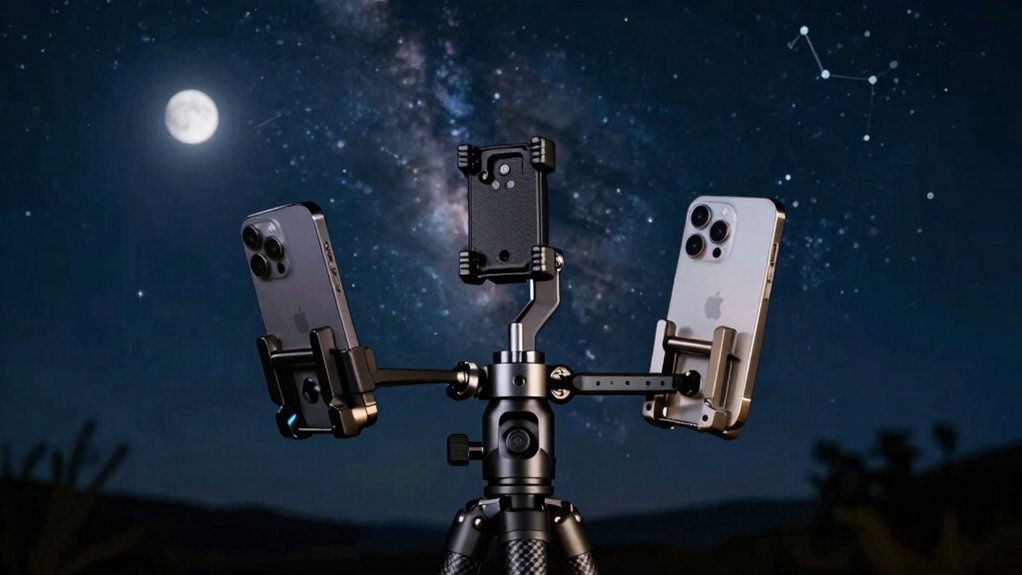
Why settle for just viewing when your smartphone can transform your telescope into an imaging instrument? Smartphone adapters let you capture digital images and videos directly through your eyepiece, turning observations into shareable memories.
Many beginner kits pair phone docks with eyepieces, offering app-guided targeting features like StarSense that help you locate and lock objects in view. You’ll frame shots conveniently on your device’s screen before imaging.
Ensure compatibility with your phone model, Android/iOS version, and camera size for secure mounting. Remember that imaging capabilities depend on your telescope’s aperture and focal length—brighter targets like the Orion Nebula work better than faint galaxies with budget setups.
Budget-Friendly Accessory Inclusions
Beyond smartphone imaging capabilities, the accessories bundled with your telescope determine how quickly you’ll locate objects and how comfortably you’ll observe them.
A red dot finder or alignment aid dramatically speeds target acquisition, eliminating frustration during your first observing sessions. You’ll spend less time searching and more time exploring.
A Barlow lens—typically 2× or 3×—doubles or triples your magnification, revealing fine details in galaxies and nebulae without purchasing expensive eyepieces. This single accessory dramatically expands your observing potential on a budget.
Moon filters protect your eyes during bright lunar observations while reducing glare that washes out surface details. Filter sets enhance contrast across various deep-sky targets.
A sturdy tripod and stable mount are non-negotiable. They maintain steady framing for longer exposures and prevent vibration-induced blurring, directly improving your astrophotography results.
Frequently Asked Questions
What Is the Difference Between Refractor and Reflector Telescopes for Astrophotography?
You’ll find that refractors use lenses to focus light, giving you sharp images with minimal maintenance, while reflectors use mirrors, offering you wider fields of view and better value for astrophotography budgets.
How Much Should a Beginner Budget for Quality Camera Equipment and Mounts?
You’ll want to budget $500-$1,500 for quality camera equipment and mounts. You can start with a basic DSLR and a sturdy equatorial mount, then upgrade your gear as you gain experience and refine your astrophotography skills.
Can I Use Smartphone Adapters With Budget Telescopes for Astrophotography?
You can definitely use smartphone adapters with budget telescopes for astrophotography. They’re affordable and work well for lunar and planetary imaging. You’ll need a sturdy adapter and a tripod mount to minimize vibration and ensure sharp results.
What Are the Best Locations for Astrophotography With Minimal Light Pollution?
You’ll find the darkest skies in remote rural areas, national parks, and designated dark-sky reserves far from cities. You’re seeking locations at least 50 miles from urban centers where light pollution won’t interfere with your observations.
How Long Does It Take to Learn Astrophotography Techniques and Image Processing?
You’ll develop basic astrophotography skills in three to six months with consistent practice. Mastering image processing takes longer—typically six months to two years—as you’ll refine techniques and build your post-processing expertise gradually.